Water warmth
The most comfortable swim comes from June to September, when the sea hovers around 26–28°C (79–82°F).

A personal, photo-minded map of the Amalfi Coast shoreline — where to swim, where to book a lounger, and which coves stay quiet.
The Amalfi Coast beach season runs from around Easter to early November, and the sea is warmest from June to September at about 26-28°C. Most beaches are pebbly. For space and easy parking, pick Vietri sul Mare or Maiori, the longest beach on the coast. For quiet water, try Atrani or the boat-only coves near Erchie, and for the famous view, Positano, the priciest beach scene. In July and August, book loungers ahead in Amalfi and Positano.
Last updated:
The coast wakes up around Easter, when the beaches are cleaned, sand is refreshed, and the first umbrellas appear. The season runs into the first weeks of November, but the most comfortable swims arrive between June and September.
Most Amalfi beaches are pebbly, so bring water shoes if you love long shoreline walks. City beaches are well equipped, and a day setup typically includes two loungers and one umbrella. July and August are loud and full — reserve ahead for Amalfi and Positano.
The most comfortable swim comes from June to September, when the sea hovers around 26–28°C (79–82°F).
Most Amalfi beaches are pebbly. Big towns counter it with full service, smooth walkways, and shaded terraces.
A standard setup is two loungers plus one umbrella for the day. In July–August, reserve ahead in Amalfi and Positano.
Eleven shores, eleven moods — from wide promenades to hidden cliff coves.
The widest and most accessible beach on the coast, with easy parking, democratic prices, and steady cleaning. A great base if you prefer to stay closer to the edge of the coast.
A tiny fishing village tucked into a quiet bay. Boat-only coves hide along the cliffs, perfect for privacy and slow, quiet swims.
The longest beach on the Amalfi Coast, popular with families. You can find budget stays, but premium zones can charge higher to keep crowds down.
A smaller, softer cousin to Maiori. It feels intimate and sweet, but it fills up fast in peak season.
Ravello’s official beach, wedged between cliffs. Reach it via a 120-step staircase from the road. Motorcycle parking only, yet Atrani is an easy swim away.
Split by a small river, with clean water and a handful of bars. It stays calm most of the year but fills up in July and August.
The main beach and the most crowded, especially near the cruise pier. Prices range from budget to premium, with private hotel clubs nearby and wilder cliffs beyond the port.
Home to Grotta dello Smeraldo, the emerald-lit sea cave. The beach itself is small, cozy, and wrapped in rock and greenery.
One of the coast’s most photogenic spots. There’s no parking, so cars line the road with the risk of a fine. The view is the reward.
Praiano nails the golden hour. Marina di Praia is framed by cliffs and feels secluded. It also hosts one of the rare seaside discos with music right by the water.
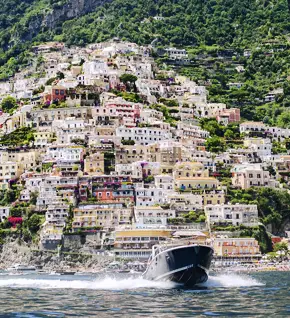
The most photographed town on the coast and the priciest beach scene. You’re paying for the name, the views, and the nightlife like Music on the Rocks.
Small details that make the day smoother.
Every beach keeps a public strip where you can lay a towel and swim. For comfort, rent a set — especially if you plan to stay all day.
Amalfi rentals often offer license-free boats within local limits. They are perfect for the Galli Islands, sea caves, and hidden coves. Keep distance from the shore and ask the operator about allowed zones.
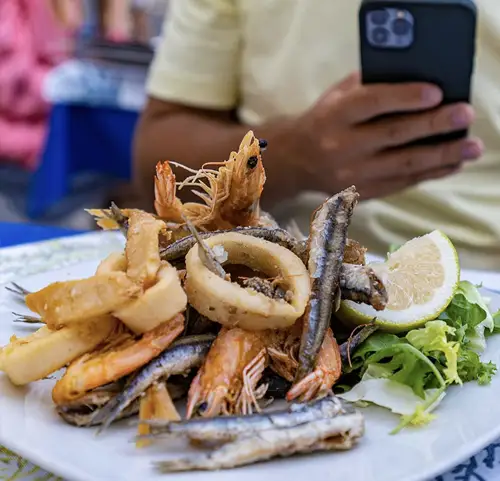
Some trattorias are accessible only from the water. Arrive by boat, anchor, swim in, and enjoy a long, slow lunch between swims.
Short answers about water temperature, pebbles, free strips and boats.
The warmest and most comfortable swims are from June to September, when the sea is around 26-28°C (79-82°F). The beach season starts around Easter, when beaches are cleaned and the first umbrellas go up, and it runs into the first weeks of November. July and August are the loudest and busiest months, so book sunbeds ahead in Amalfi and Positano.
Most Amalfi Coast beaches are pebbly, so water shoes help if you like long walks along the shore. The bigger town beaches make up for it with full service, smooth walkways and shaded terraces. Vietri sul Mare has the widest and most accessible beach on the coast, and Maiori has the longest one.
Yes. Every beach keeps a public strip where you can lay a towel and swim without paying. For a full day it is more comfortable to rent a set, which usually means two loungers and one umbrella. In July and August, Amalfi and Positano get busy, so reserve ahead.
Maiori has the longest beach on the Amalfi Coast and is popular with families, with budget options as well as pricier zones. Vietri sul Mare is the widest and most accessible beach, with easy parking and fair prices. Minori is smaller and sweeter but fills up quickly in peak season.
Erchie, a tiny fishing village in a quiet bay, has boat-only coves along the cliffs for private, slow swims. Atrani stays calm for most of the year and only fills up in July and August. Marina di Praia in Praiano is framed by cliffs and feels secluded. Castiglione, below Ravello, is reached by a 120-step staircase.
Amalfi rentals often offer licence-free boats within local limits. They are a good way to reach the Galli Islands, sea caves and hidden coves, and some trattorias can only be reached from the water. Keep your distance from the shore and ask the operator which zones you are allowed to use.
Amalfi is not just a postcard — it is a coastline shaped for real holidays. You can pick a quiet cove for slow swims or a lively beach with bars and music. Choose the mood that fits your trip, and let the scenery do the rest.